

Sell the unit before you've built it.
Your buyer is standing at a hoarding, looking at a render, trying to imagine a home. Give them the walkthrough instead — on their own phone, in seconds, with no app. Then find out exactly which unit they fell for.
What the Uncertainty Gap costs a developer

Wasted site visits
Buyers cross the city to discover the layout doesn't work for them. That visit cost you a salesperson's afternoon and a buyer's goodwill.
Stalled decisions
Every unanswered spatial question is another week in the cycle. Another week of holding cost on unsold inventory.
A blind pipeline
You know a lead downloaded the brochure. You don't know whether they spent thirty seconds or thirty minutes, or which unit they kept returning to. Your team calls them in the order they arrived
Indistinguishable inventory
Three projects on the same road. Three near-identical brochures. Nothing separates you at the moment of comparison.
From render to walkthrough.
1. Walk the unit, from anywhere
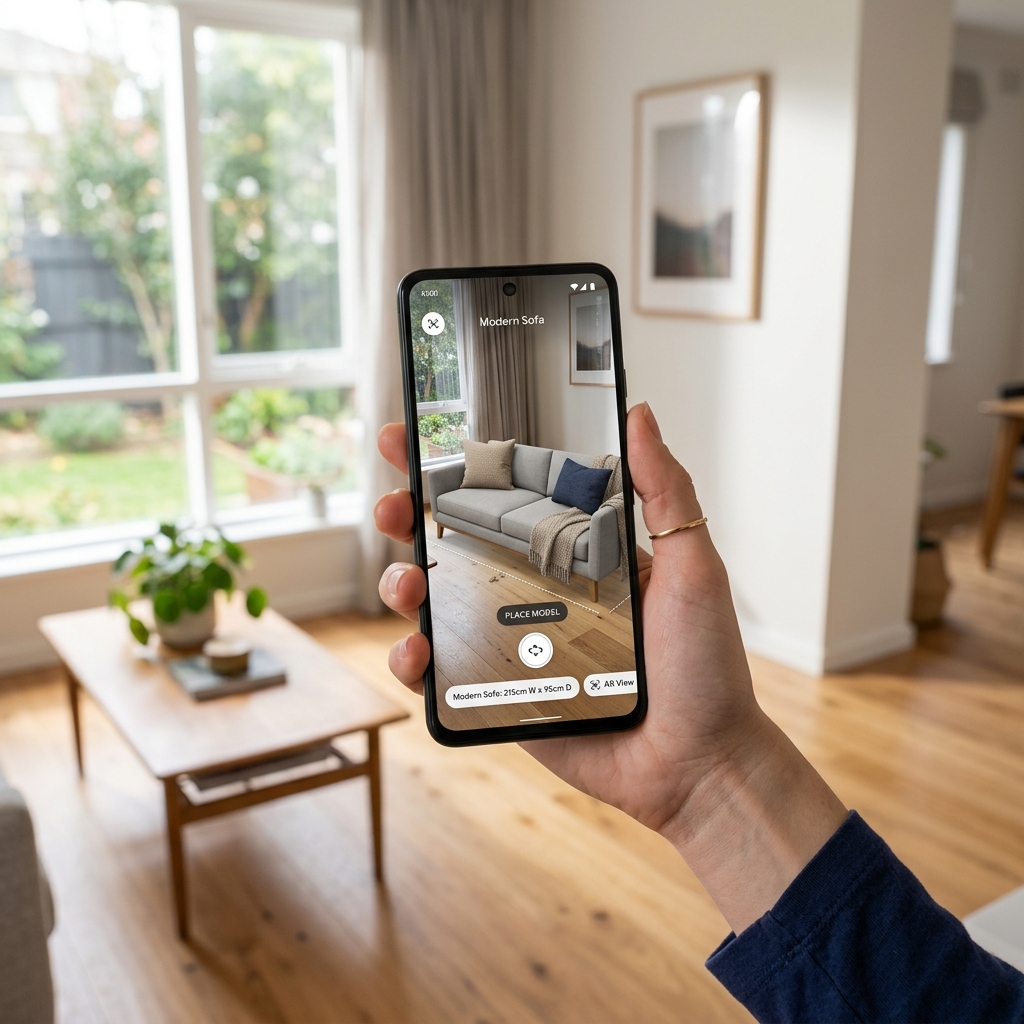
The buyer scans a QR code on your hoarding, brochure, or site office wall. The unit opens in their browser at true scale. They move through it, room by room.
2. Put the tower on the table
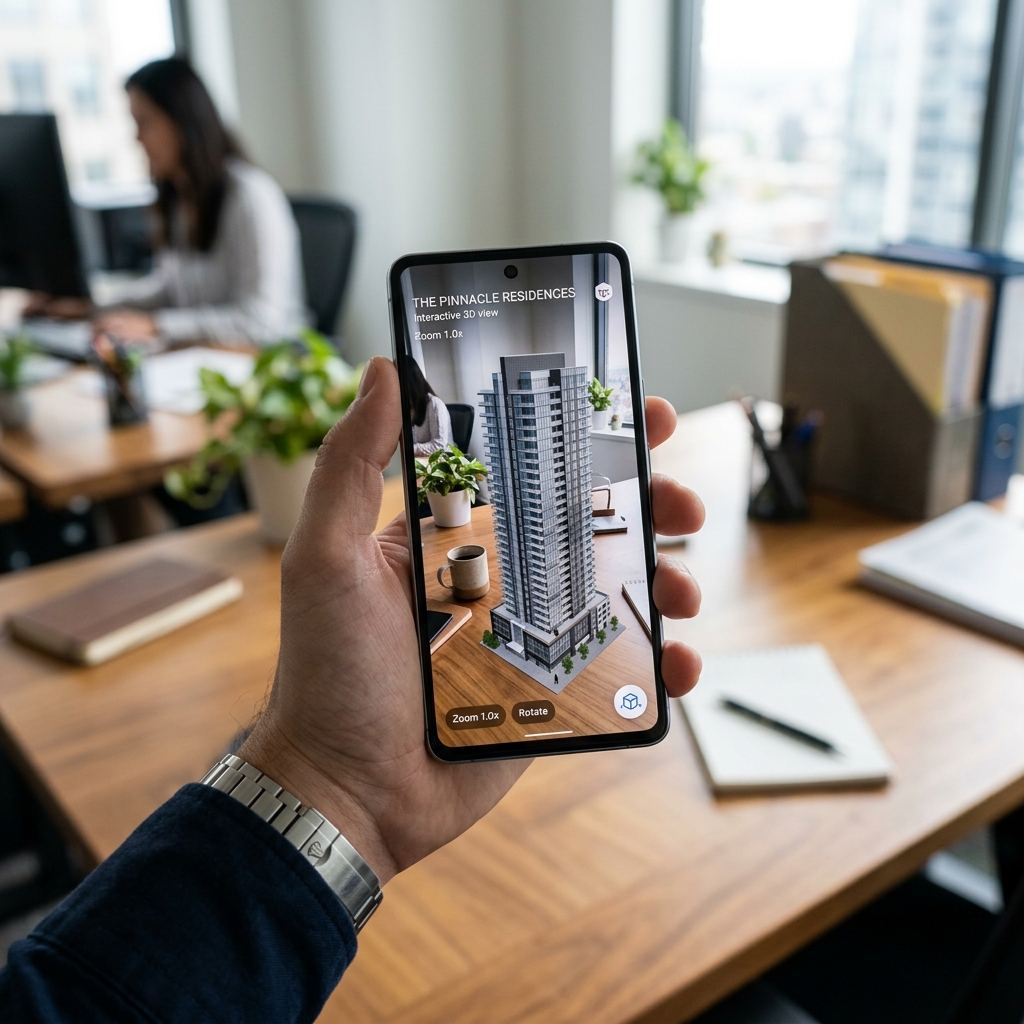
Bring the whole project — massing, towers, orientation, amenities — onto a table in the site office. Buyers grasp in thirty seconds what a scale model takes ten minutes to explain, and the tower fits in a WhatsApp message.

3. Answer questions at midnight
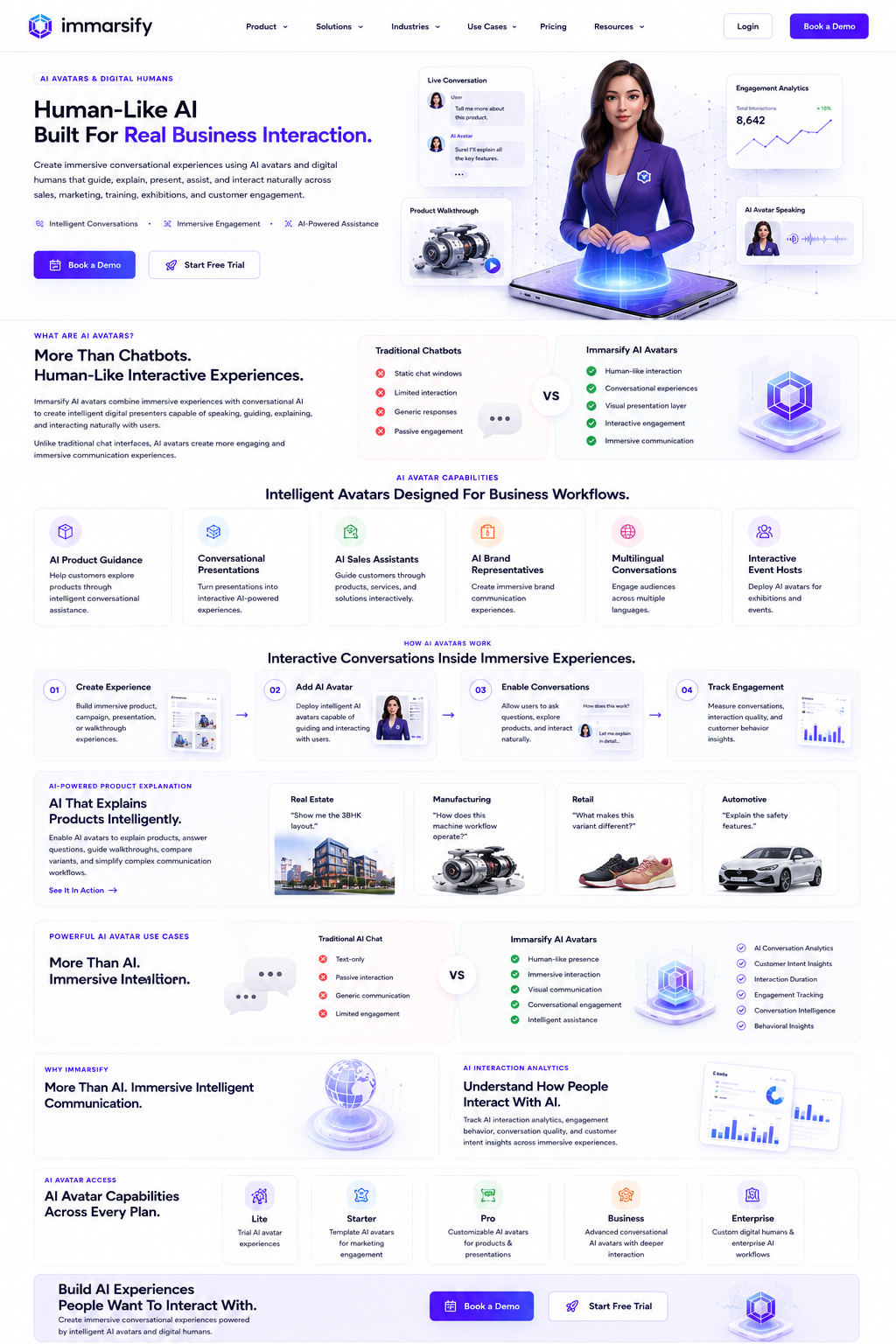
The AI assistant knows your carpet areas, possession timeline, payment plan, RERA number, and amenity list. It answers the moment the buyer asks, in their language.
4. Know who's ready
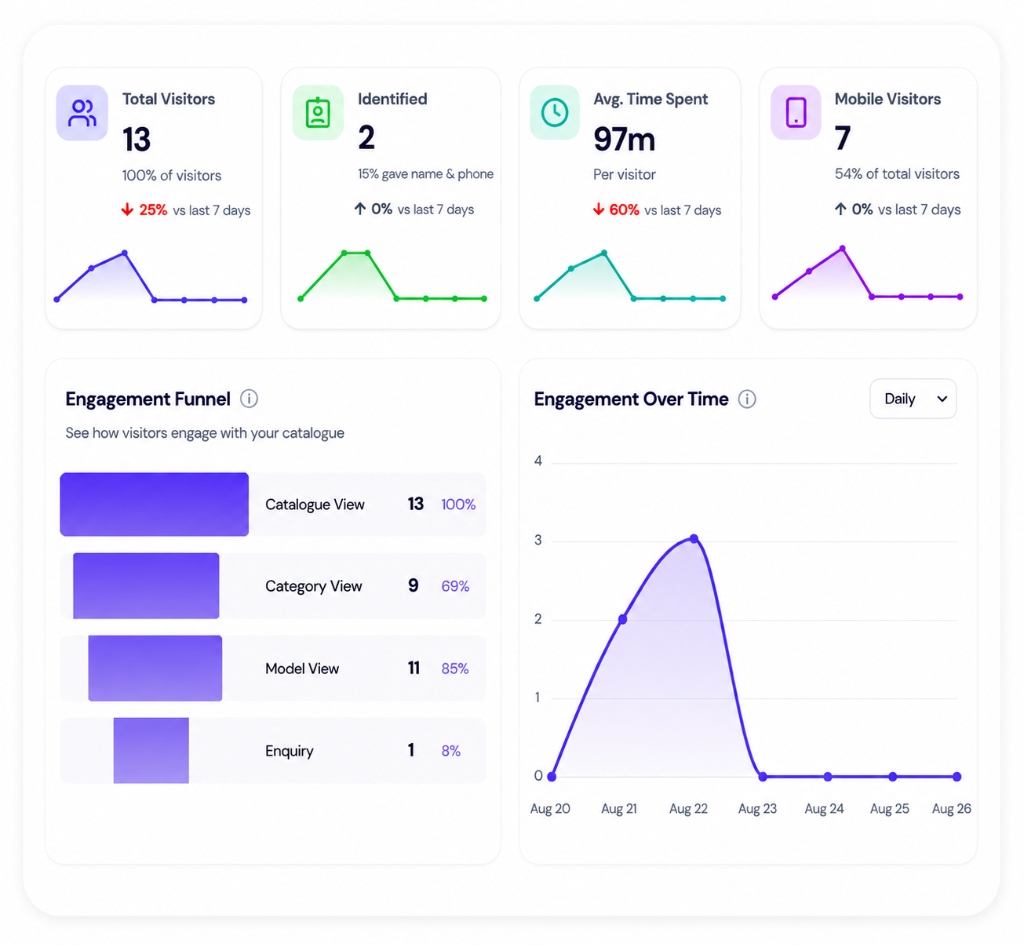
See which units each buyer explored, how long they stayed, which rooms they revisited, and what they asked. Your team calls the buyer who spent nine minutes in the east-facing 3BHK — not the one who bounced in twelve seconds.
Send us one floor plan.
We'll show you the experience.
No setup. No app. Just scan and explore.