
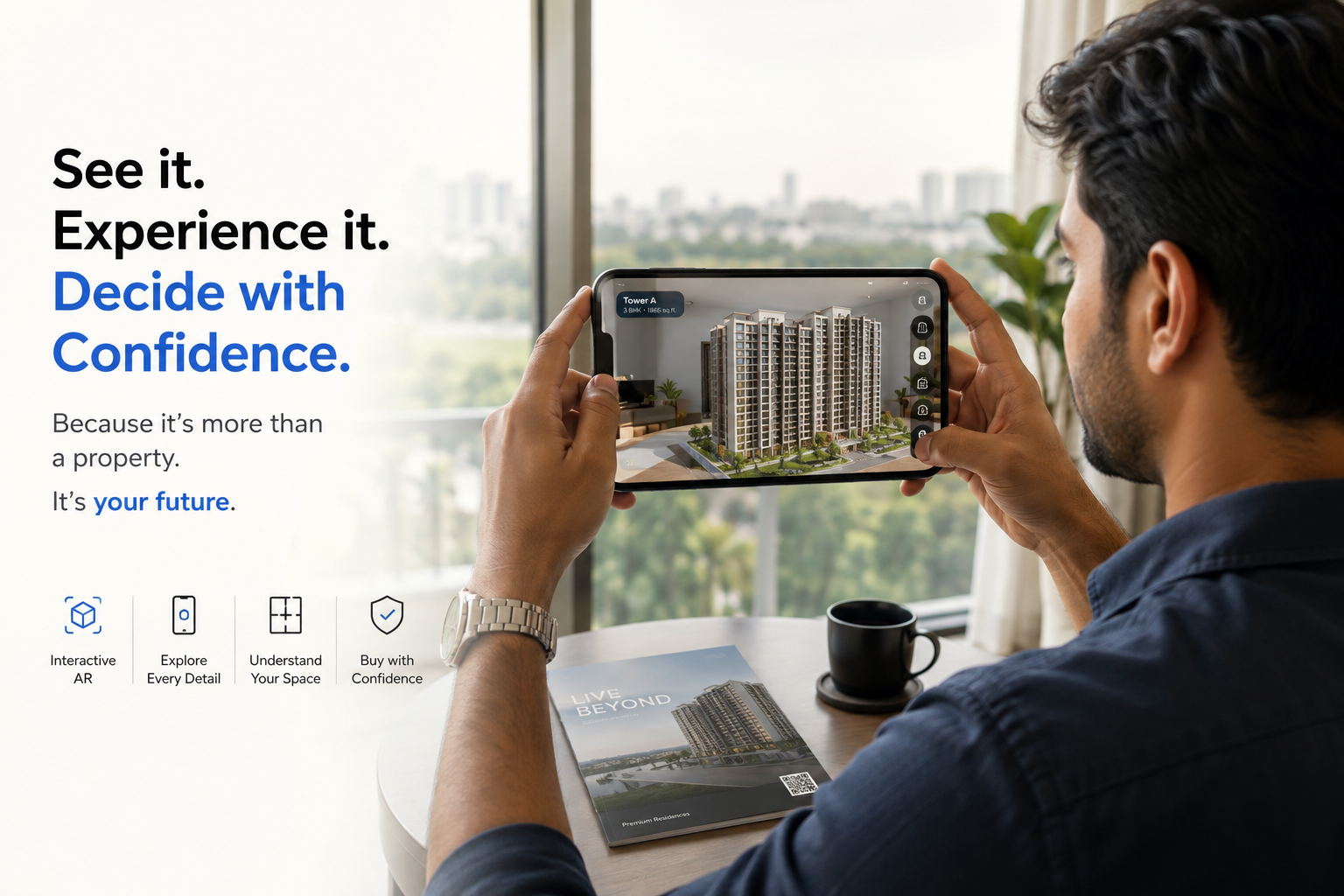
Buying a home is one of the biggest financial decisions most people make. Yet when it comes to new and under-construction properties, buyers are often asked to make that decision using floor plans, renders, brochures, sample apartments, and conversations with sales teams. The information may be there. But the experience isn't. And that creates a fundamental problem:
How do you confidently commit to something you cannot physically see yet?
The Uncertainty Behind the Decision
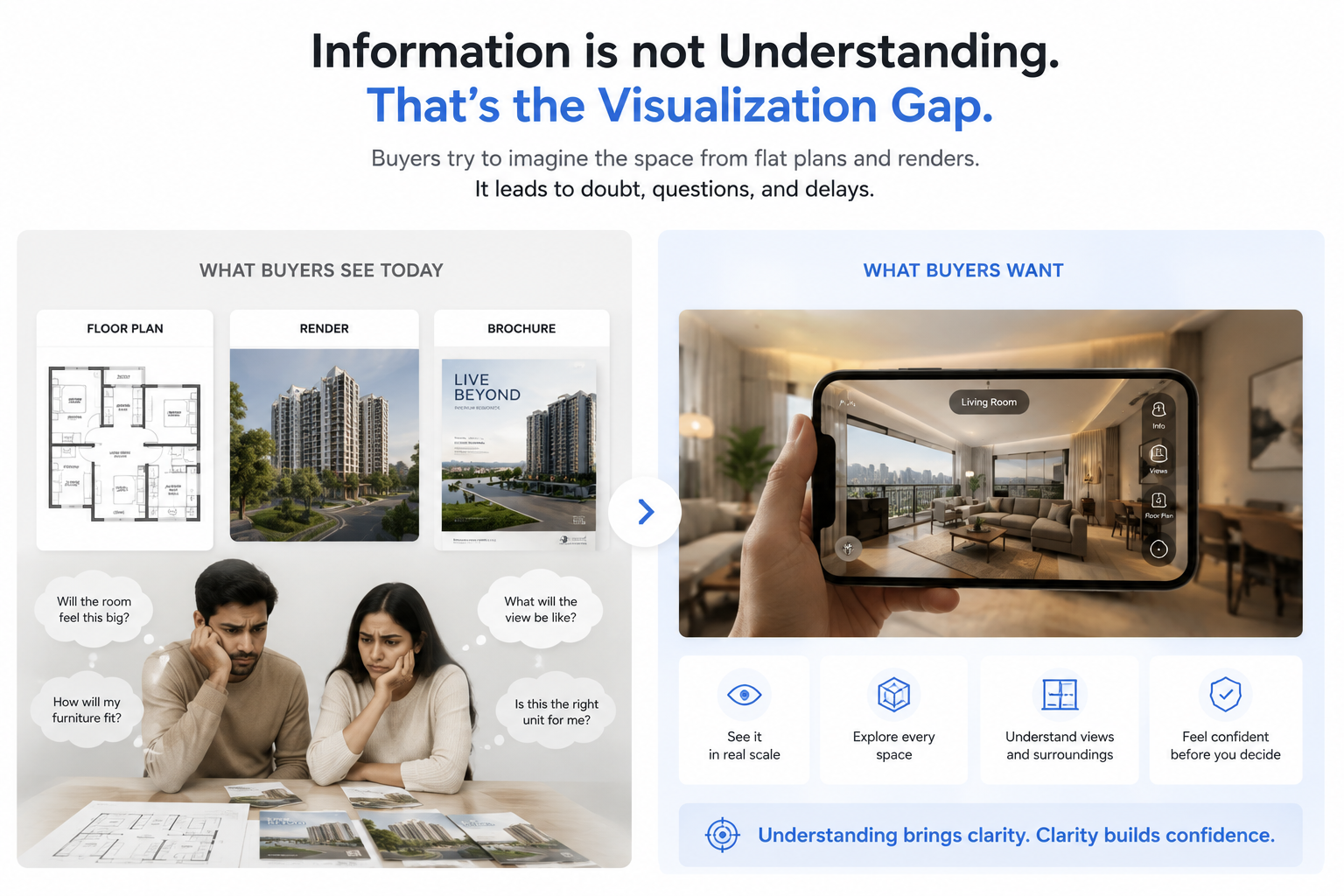
When a property isn't built or when the buyer can't physically experience the exact unit they're considering they have to mentally translate information into reality.
- A floor plan needs to become a room.
- A 3D render needs to become a home.
- A tower elevation needs to become a view from a balcony.
- A list of amenities needs to become a lifestyle.
For some buyers, that translation is easy. For many others, it isn't. and when the buyer cannot confidently understand what they are buying, hesitation naturally becomes part of the journey.
The buyer isn't necessarily asking for more information. They're asking for more certainty.
Why Traditional Property Marketing Has a Visualization Gap
Real estate marketing has become highly sophisticated. Developers use:
- High-quality renders
- Detailed brochures
- Interactive websites
- Videos
- Floor plans
- Sample apartments
- 360° tours
- Virtual presentations
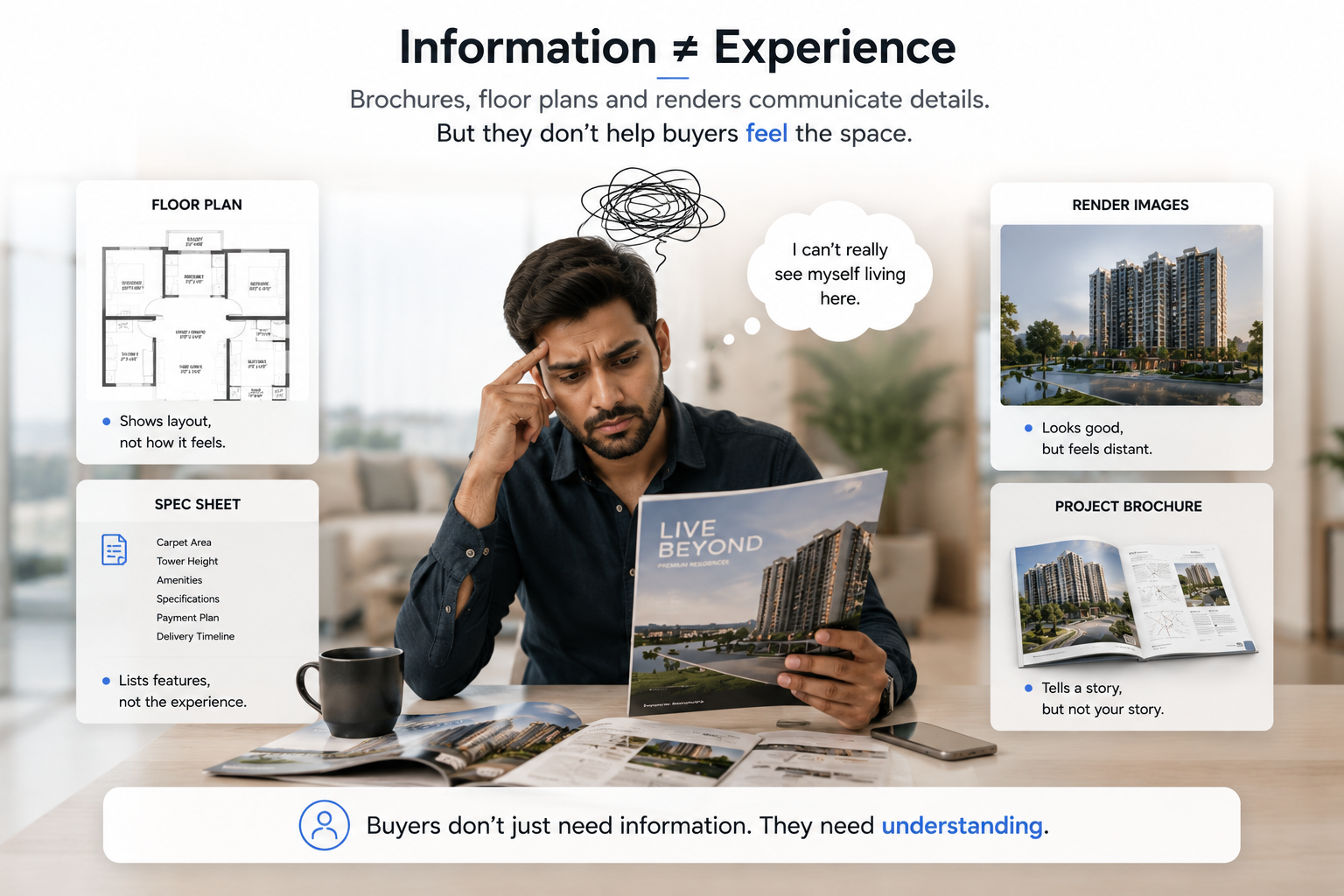
All of these communicate information. But there is still a fundamental difference between seeing information about a property and experiencing the property itself. A floor plan can tell you where the bedroom is. It doesn't necessarily help you understand how the bedroom will feel. A render can show a beautiful living room. It doesn't necessarily help you understand its relationship with the rest of the apartment. A brochure can explain the amenities. It doesn't let you explore them. This is the gap between information and experience.
What Happens When Buyers Can't Visualize the Decision?
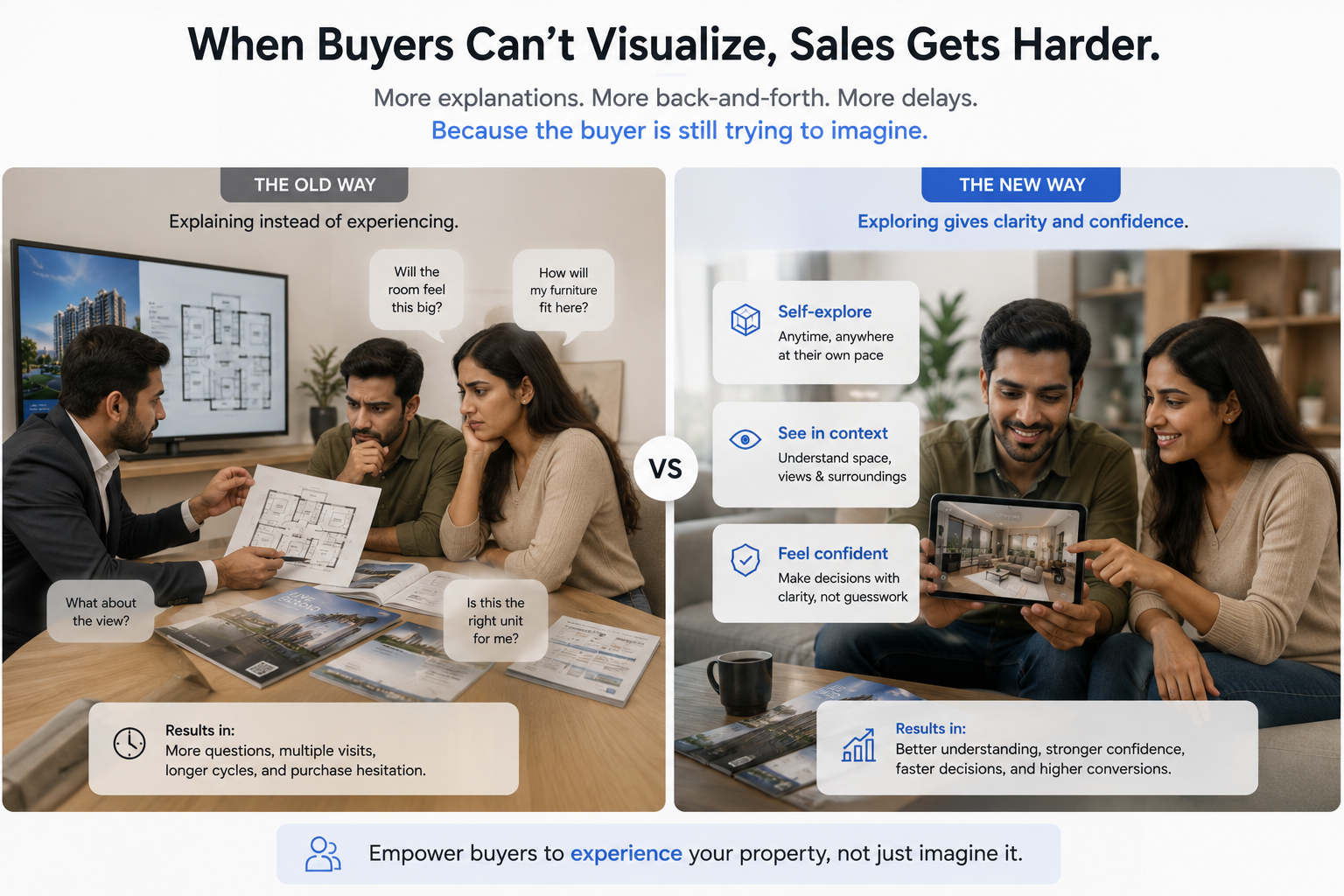
When buyers struggle to visualize a property, the sales process can become more dependent on explanation. The salesperson has to explain the layout.
Explain the view.
Explain the size.
Explain the amenities.
Explain the differences between units.
Explain why one configuration might be better than another.
The more the buyer has to imagine, the more the salesperson has to explain.
And the more that decision depends on imagination, the harder it can be for the buyer to feel confident.
This is particularly important for:
- Under-construction properties
- New developments
- Large residential projects
- Premium apartments
- Villas
- Properties with multiple configurations
The challenge isn't that the developer doesn't have enough content. The challenge is turning that content into something the buyer can actually experience.
From "Look at This" to "Experience This"
This is where immersive experiences change the conversation. Instead of showing a buyer a static tower image:
Let them see the tower in their own environment.
Instead of handing them a floor plan:
Let them explore the apartment.
Instead of explaining the relationship between buildings:
Let them explore the project spatially.
Instead of telling them about the amenities:
Let them experience the spaces.
The difference is subtle but important. You're no longer asking:
"Can you imagine living here?"
You're giving the buyer something much closer to the experience of being there.
Where Augmented Reality Fits
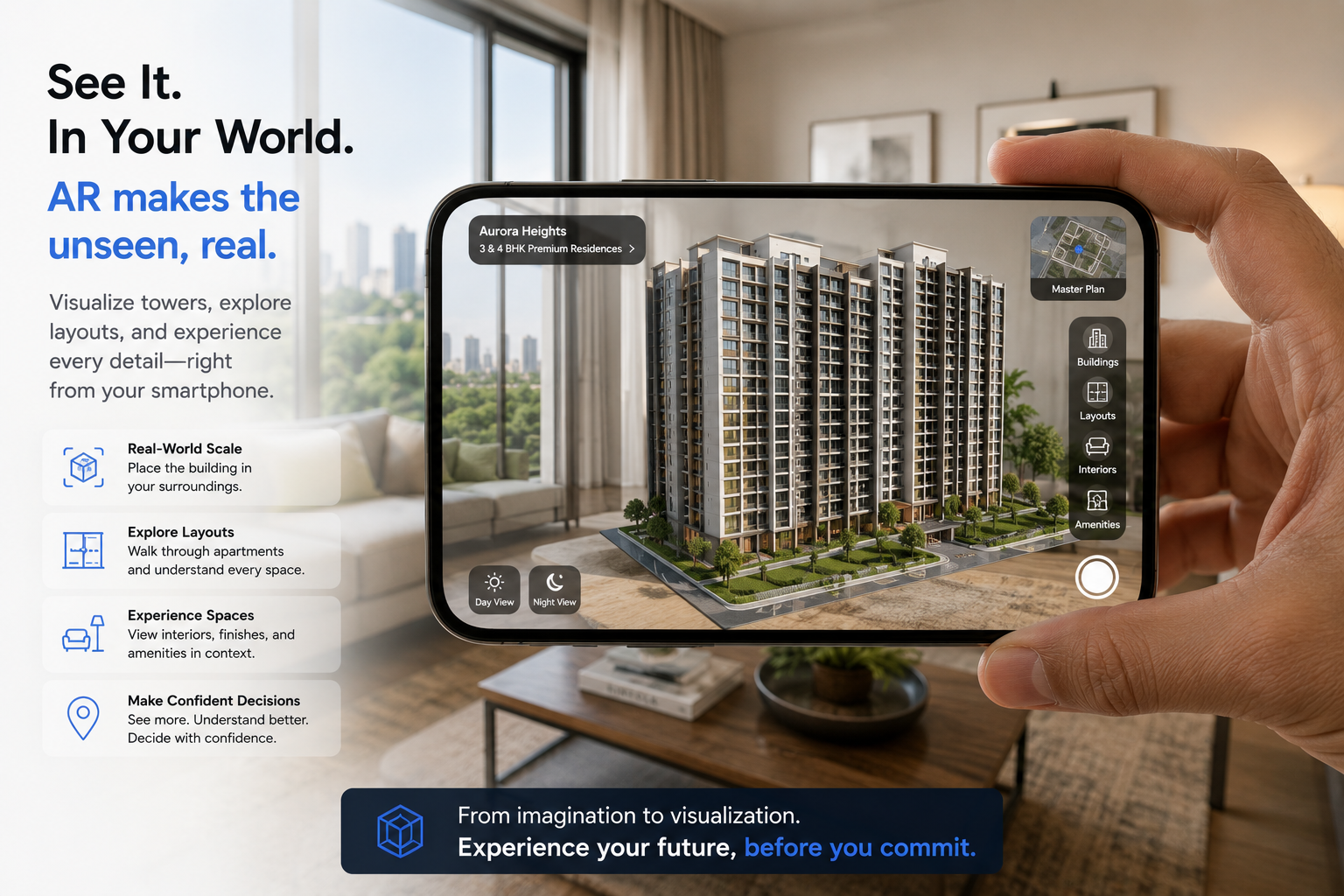
Augmented Reality isn't valuable simply because it is new technology. Its real value in real estate is that it can help bridge the gap between digital information and physical understanding.
A buyer can use a smartphone to:
- Visualize a tower or building in their environment
- Explore an apartment layout
- Understand spatial relationships
- View property configurations
- Experience selected spaces
- Interact with project information
And because these experiences can be accessed directly through a smartphone, they can become part of the existing sales journey rather than requiring the buyer to learn an entirely new system. The technology is the enabler. The outcome is greater clarity.
The Real Opportunity for Developers
The opportunity isn't simply to "add AR" to property marketing.
It's to rethink how a buyer moves from:
Awareness → Interest → Exploration → Confidence → Decision
Traditional marketing is very good at creating awareness. Immersive experiences can make the exploration stage much more tangible. And that matters because a buyer who can explore a property more meaningfully can ask better questions, understand their options more clearly, and have a more informed conversation with sales. The goal isn't to replace the salesperson.
It's to give the salesperson a better experience to sell with.
From Brochure to Buyer Experience
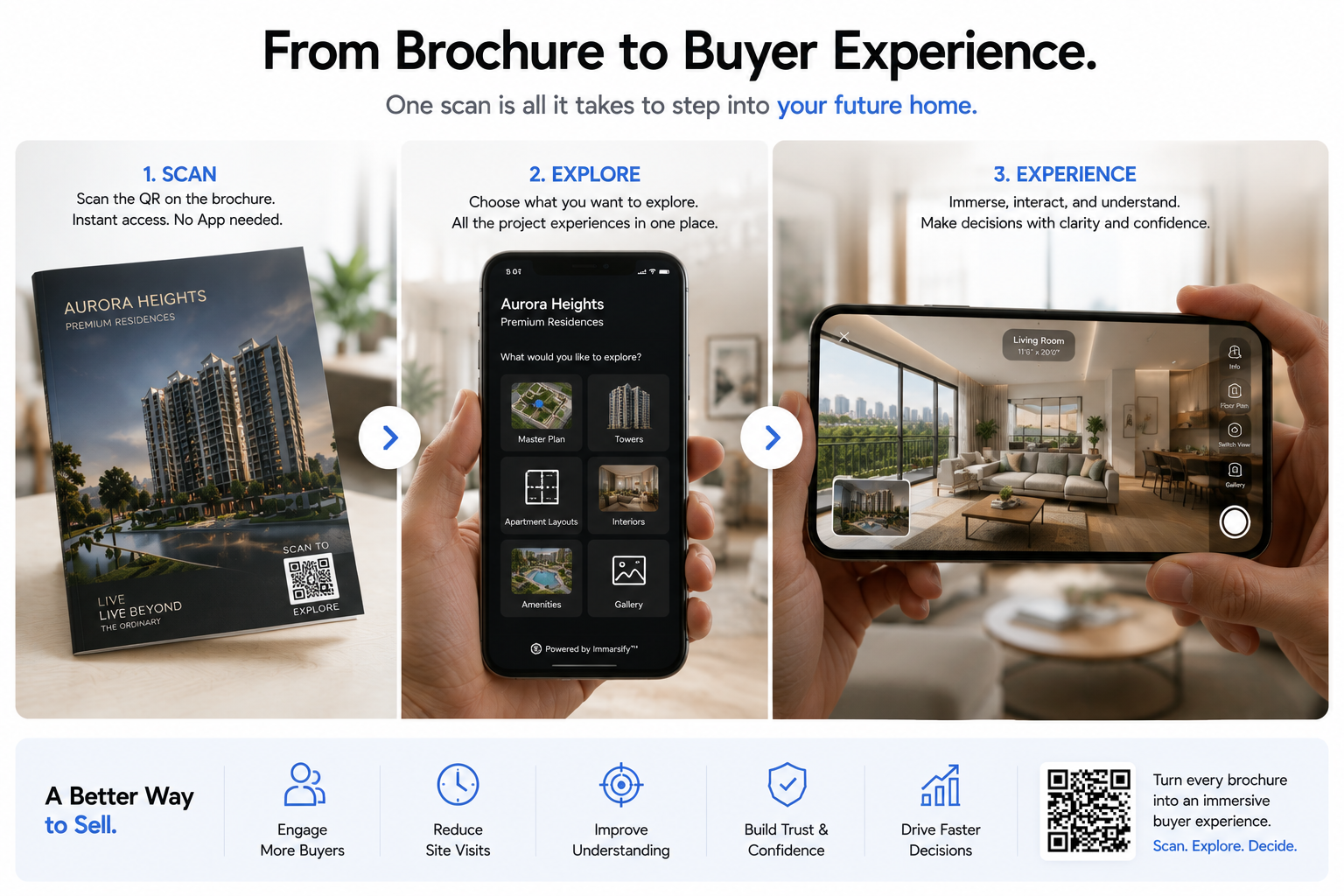
Imagine a buyer receives a project brochure. Instead of simply reading about the project, they scan a QR code.
They can explore the master plan.
They can view different towers.
They can explore floor plans.
They can visualize the property in AR.
They can walk through selected spaces.
They can discover amenities, location, galleries, videos, and other project information.
Now the brochure isn't just a document. It becomes the entry point to the buying experience.
That is a fundamentally different role for property marketing.
The Future of Property Sales Isn't More Information
Real estate developers already have enormous amounts of information. The next challenge is making that information easier to understand, explore, and experience.
Because buyers don't simply need to know:
"What are you selling?"
They need to understand:
"What am I actually buying?"
And ultimately:
"Can I see myself living here?"
That is where immersive buyer experiences become valuable. Not because they make a property look impressive. But because they can help reduce the distance between seeing a property on a screen and understanding the experience of owning it.
From Uncertainty to Confidence
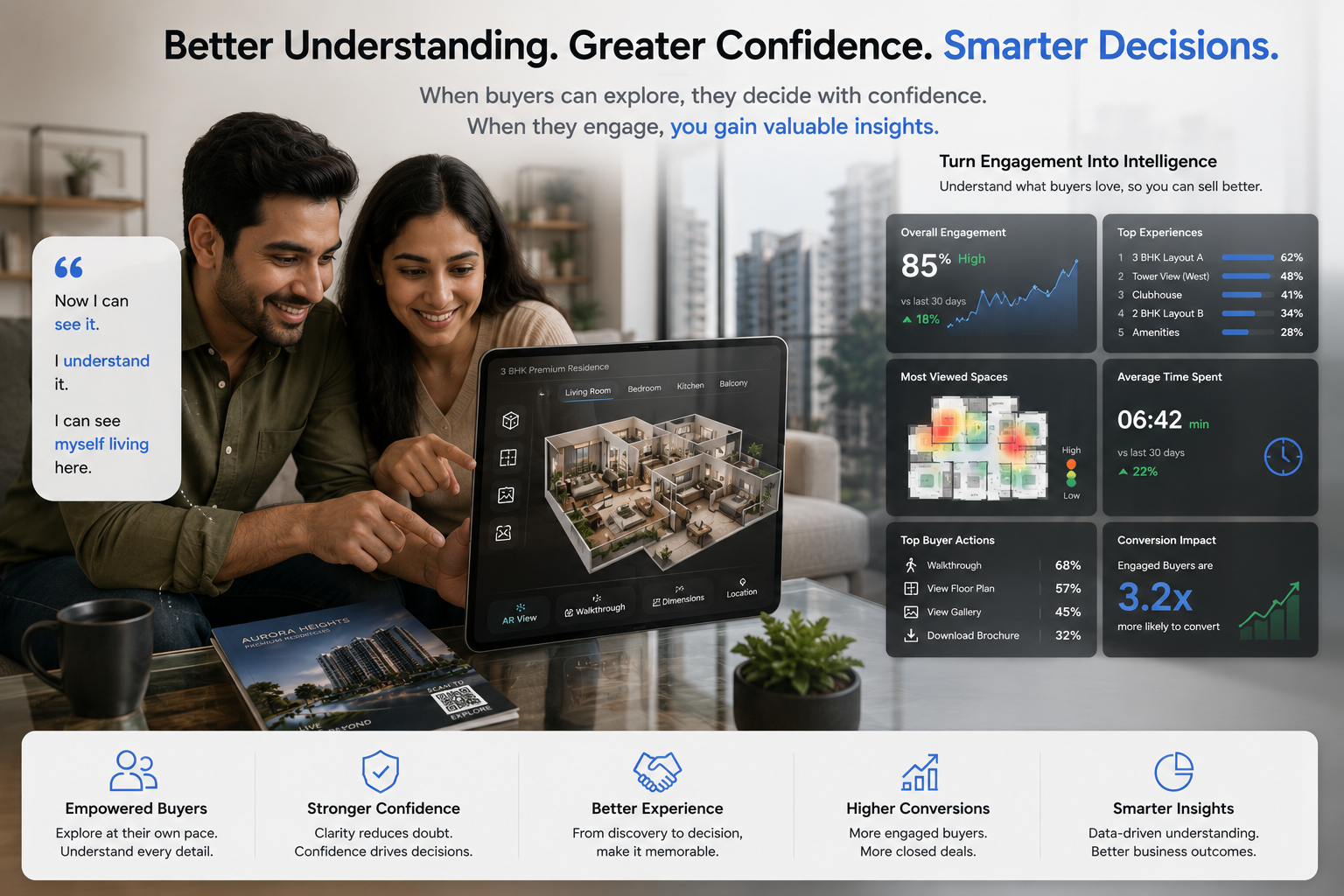
The objective isn't to eliminate every uncertainty from a property purchase. No technology can do that. The objective is to remove the uncertainty that comes from not being able to see, explore, and understand the property properly. That's the opportunity.
Show the buyer more.
Let them explore more.
Help them understand more.
Give them more confidence to decide.
Certainty Before Commitment.
That's the future of immersive property experiences.
Frequently Asked Questions
Why do homebuyers hesitate to buy under-construction properties?
One important reason is the difficulty of visualizing something that doesn't physically exist yet. Buyers may have access to floor plans, renders, videos, and other information, but still struggle to understand what the finished property will actually feel like.
Can AR help buyers visualize an unbuilt property?
Yes. AR can allow buyers to view digital representations of buildings, apartments, and other property elements within a real-world environment, helping make spatial information more tangible.
Does AR replace traditional real estate marketing?
No. AR works best as an extension of existing marketing and sales experiences. Brochures, websites, renders, videos, sample apartments, and sales teams remain valuable; immersive experiences add another layer of visualization and interaction.
Does a buyer need an app to experience AR?
Not necessarily. WebAR experiences can be accessed through a mobile browser, allowing developers to provide immersive experiences without requiring customers to download a dedicated application.
What should developers visualize in AR?
Depending on the project, useful experiences can include towers, buildings, apartments, villas, master plans, amenities, and selected interior spaces.
Conclusion
Homebuyers aren't simply buying square footage. They're making a decision about a future they cannot always see yet. The better a developer can help them understand that future, the better the buying experience can become.
The shift is simple:
From brochures to experiences.
From information to understanding.
From imagination to visualization.
From uncertainty to confidence.
That is the real opportunity behind immersive property experiences.
Want to see what your property could look like as an immersive buyer experience?
Explore Immarsify™ →
Immarsify helps real estate developers transform floor plans, brochures, and property content into immersive buyer experiences using interactive experiences, AR, AI, and buyer engagement intelligence.